

By David Williams
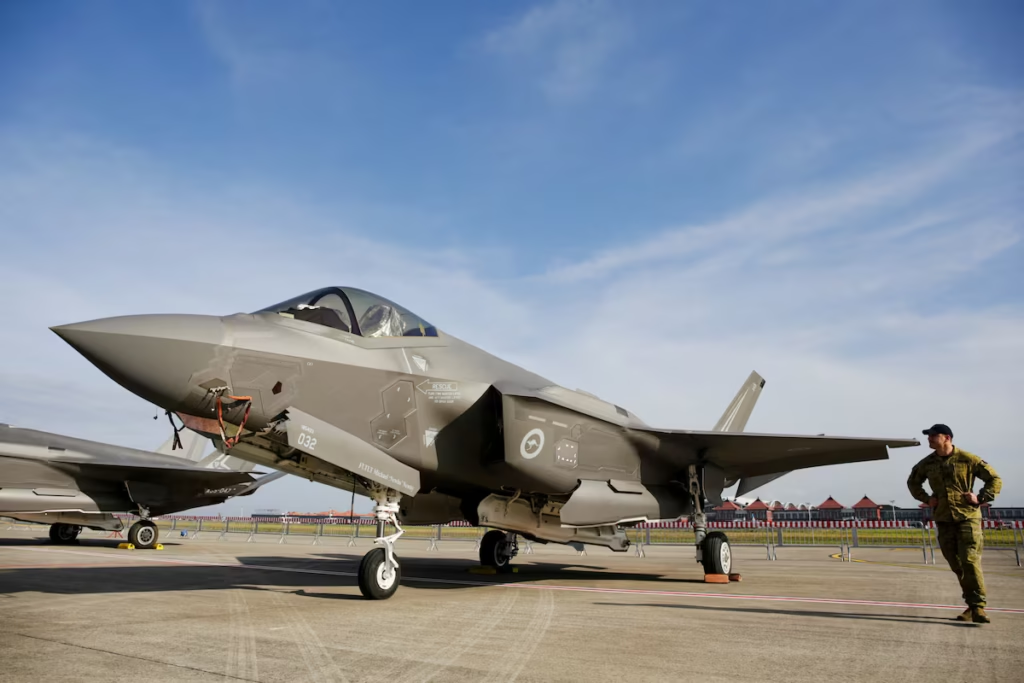
As we approach 2026, the F-35 “Lightning II” fighter jet is no longer just a cutting-edge weapon representing the pinnacle of global military technology; it has become a focal point in a heated diplomatic and trade conflict between traditional allies, the United States and Canada. With the threat of reciprocal tariffs escalating and Washington hinting at a review of mutual defense agreements, the “Stealth of the Air” finds itself caught in the middle of an unprecedented political storm that threatens to reshape the security landscape in North America.
The Roots of the Crisis: From Arms Deals to Tariff Wars
The story began when the Canadian government, under Prime Minister Mark Carney, pledged a comprehensive review of the purchase of 88 F-35 fighter jets, a deal valued at approximately $27.7 billion Canadian dollars. This move came as a direct response to the protectionist trade policies pursued by the administration of US President Donald Trump, which included imposing 100% tariffs on Canadian goods in retaliation for trade agreements between Ottawa and Beijing.
For Washington, Canada’s withdrawal from the deal, or even a reduction in its share, represents not only a financial loss for Lockheed Martin, but also a blow to defense coordination under the umbrella of NORAD (North American Aerospace Defense Command).
US Threats: Canadian Sovereignty at Stake
In remarks that sparked widespread controversy in Ottawa’s political circles, the US Ambassador to Canada, Peter Hoekstra, warned that any Canadian withdrawal from the aircraft purchase would force Washington to “fill the security gaps” itself. This warning was not merely diplomatic rhetoric; it included an explicit indication that US fighter jets might be compelled to fly more frequently and uncoordinatedly in Canadian airspace to protect the continent’s security, which Canadian politicians considered a direct threat to their national sovereignty.
Experts say the US pressure aims to force Canada to choose between maintaining its commercial independence or ensuring its air security under US control.
The Swedish alternative: Is the Gripen the answer?
Amid this pressure, Ottawa has begun exploring alternatives that could grant it greater autonomy, most notably the Swedish Saab Gripen. Proponents of this option argue that the Gripen offers Canada a “Made in Canada” advantage, as the Swedish company has offered to build the aircraft on Canadian soil, creating thousands of jobs and protecting sovereign technology from direct US control through software and spare parts.
However, military leaders in the Royal Canadian Air Force warn that abandoning the F-35 means losing interoperability with its closest ally, leaving Canada technologically isolated in any major future conflict.
The military economy: The cost of division. The crisis extends beyond aircraft to encompass the integrated defense industry base between the two countries. More than 100 Canadian companies are currently involved in producing parts for the F-35, which is sold globally. If the trade war continues, these companies could find themselves deprived of US contracts, costing the Canadian economy billions of dollars.
Conversely, the Canadian side argues that over-reliance on the US for spare parts and software updates for the F-35 makes the Canadian air force vulnerable to Washington’s volatile political decisions, potentially grounding aircraft during crises if the US administration so chooses.
In conclusion: An uncertain future for the defense relationship. While trade negotiations continue behind closed doors, the F-35 remains the most prominent symbol of the complex relationship between the two neighbors. Will Canada succeed in balancing its trade ambitions with its defense commitments? Or will the “fires of trade” burn through the bridges of trust built over decades?
What is happening today is not merely a dispute over an arms deal; it is a true test of the ability of middle-income countries like Canada to maintain their sovereignty in a world dominated by superpowers and aggressive economic policies.





Leave a Reply